Story
Burned twice. Rebuilt every time.
The name “Noojee” is commonly understood to mean “a place of rest.” The valley’s Aboriginal history reaches back many thousands of years before European settlement, and hasn’t always made it easy — but its people have, generation after generation.
1860s–1900s
Gold, then timber
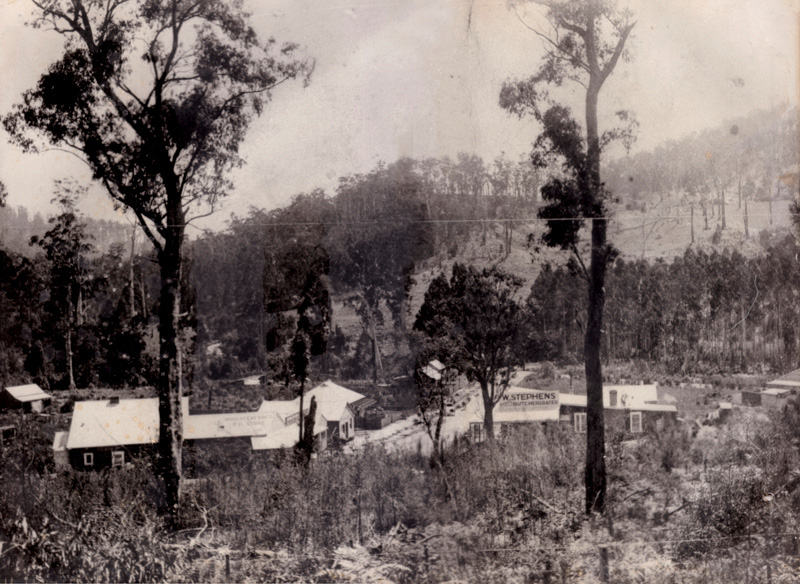
Prospectors worked the creeks from the early 1860s, chasing gold. The settlers and timber cutters who followed in the 1880s found something that would last longer — mountain ash standing taller than almost any tree on earth. By the early 1900s there was a town.
1919–1954
The railway years
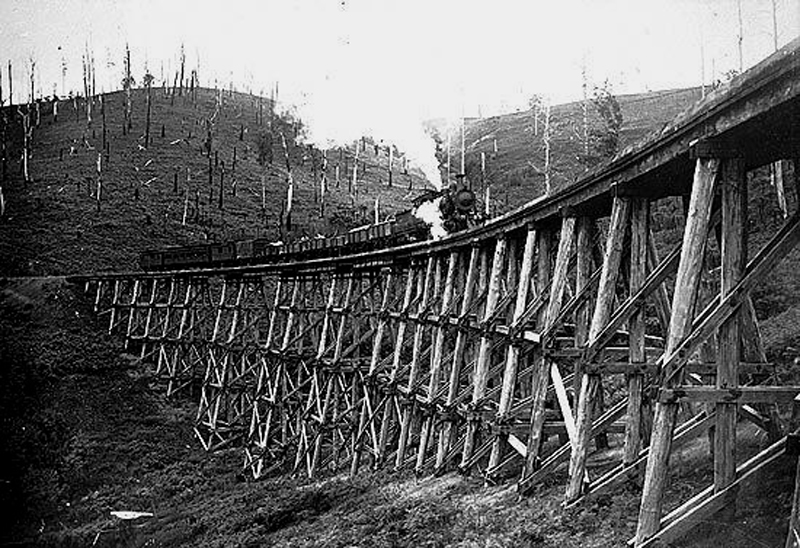
In 1919 a line came up from Warragul, crossing seven trestle bridges to reach the mills. Tramways fed it timber from deep in the bush, and one mill’s hydro plant lit not just Noojee but Neerim and Warragul besides. The line closed in 1954; trucks took over from there.
1926 & 1939
Fire, twice
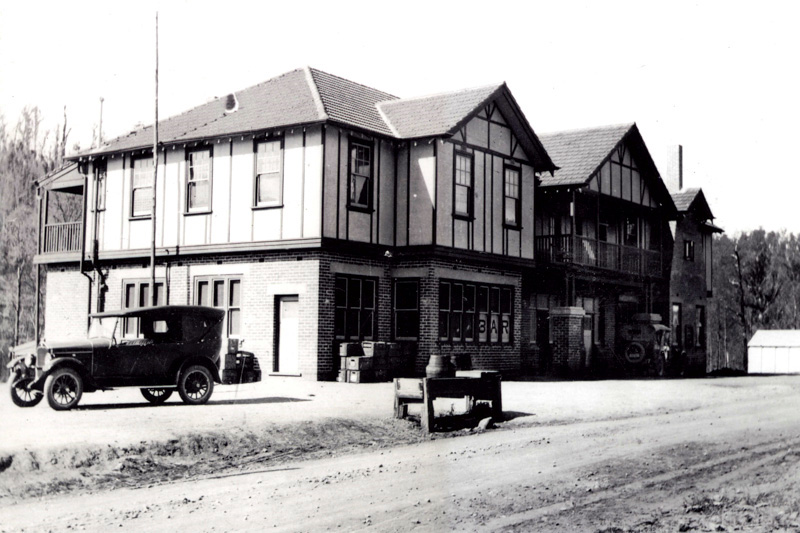
Bushfires took the town in 1926, and again on Black Friday 1939. Both times Noojee burned to the ground; both times it rebuilt — around the Noojee Hotel, the one building left standing, which did duty as meeting hall and schoolroom until the town found its feet again.
Today
One mill still running
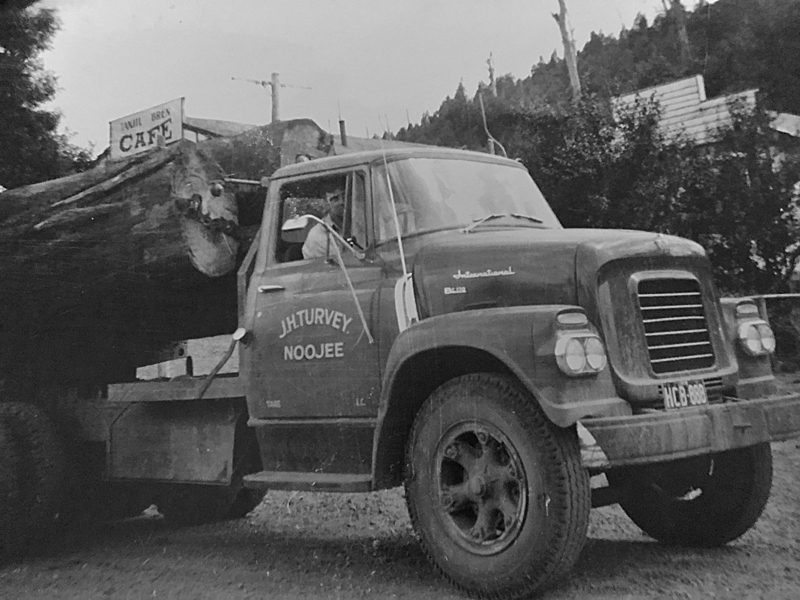
Most of Victoria’s timber towns lost their mills years ago. Noojee kept one — still turning logs into boards a few hundred metres from where the trout run, a working thread back to the industry that built the place.
A name worth knowing
The Angel of Noojee
During the 1939 Black Friday fires, telephonist Gladys Sanderson stayed at her switchboard to warn the towns down the line as the flames closed in — work still remembered with a reserve named in her honour. It’s the kind of story this valley tells often: not about the fire, but about who stayed.